 Abdul Basit

How to convert Word to PDF without losing formatting is a skill you need if you share reports, assignments, or invoices every day. When you turn a DOCX into a PDF, even a small change in layout, fonts, or spacing can make your document look unprofessional, especially when sending files to clients, teachers, or offices in Pakistan.
In this 2026 guide, you’ll learn simple, reliable ways to convert Word to PDF while keeping everything in place. We’ll walk through built-in options in Microsoft Word, safe online converters, and easy best practices so your PDFs always match your original document.
Key Takeaways
- Understanding the significance of preserving document formatting during conversion.
- Expert techniques for using Microsoft Word’s built-in features.
- Reliable online tools for seamless PDF conversion.
- Best practices for preparing your document prior to conversion.
- How to select the right fonts and layouts for consistent formatting.
Understanding the Importance of PDF Conversion

Converting documents to PDF is crucial. It helps both organizations and individuals deal with different document formats. The goal is to keep the document’s look the same, no matter where it’s viewed. This is key in professional settings and when you share files with clients or offices in Pakistan.
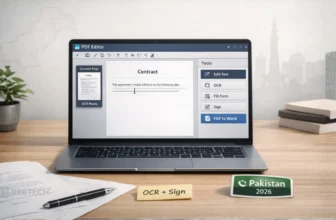
If you regularly work with contracts, reports, or scanned documents, you can also explore our PDF & Document tools on BreTech for editing and signing after conversion.
Why PDFs are the Preferred Format
PDFs are popular for many reasons. They keep visual elements like fonts and images the same. Unlike Word documents, PDFs look the same on any platform. This is important for documents that need to look professional.
Word vs. PDF: Key Differences
Word documents and PDFs are different. Word files are for editing and teamwork. PDFs are for sharing final versions. They keep formatting the same and are often smaller for sharing.
PDFs also have security features to protect sensitive info. People often choose to convert Word files to PDF to use these benefits.
How to Convert Word to PDF Without Losing Formatting

Changing your Word documents to PDFs is key for a professional look. There are many ways to do this, each suited for different needs. Microsoft Word’s built-in tools are easy to use. Online tools are great for those who want quick and simple solutions.
Using Microsoft Word’s Built-in Features
Microsoft Word has great options for keeping your document’s look when converting to PDF. You can use the “Save As” or “Export” functions to pick PDF. This way, your document keeps its layout, fonts, and design.
Whether it’s a long report or a simple letter, Word’s tools make the conversion smooth. You won’t lose any changes in layout.
Utilizing Online Conversion Tools
Online tools are a quick choice for converting Word to PDF. Sites like PDF Candy and iLovePDF help keep your document’s layout. They also let you convert many documents at once, saving time.
These tools also offer security, keeping your documents safe. Converting to PDF online is fast and easy. It also makes sharing documents quick and efficient.
Best Practices for Preserving Formatting in PDF Conversion

When you’re about to turn a Word document into a PDF, there are steps you can take to make it better. Focus on getting your document ready and picking the right fonts for your text. This will help a lot.
If you also need to edit or sign PDFs after conversion, you can choose a licensed PDF editor from our PDF & Document category on BreTech and keep everything in one workflow.
Preparing Your Document for Conversion
First, make sure your document looks the same all the way through. Use the same styles for headings, bullet points, and paragraphs. Also, check that all links work right. It’s easier to convert your document if it’s simple.
Try to get rid of extra stuff like images or complicated tables. This can help avoid problems when you’re changing it to a PDF.
Selecting Appropriate Fonts and Layouts
Picking the right fonts is key for a perfect PDF. Stick with fonts like Arial or Times New Roman. They look good on most devices.
If your document has a lot going on, think about making it simpler. Also, make sure your images are ready for PDF. This way, you can keep your design when you convert your Word document to PDF.
| Aspect | Best Practice | Rationale |
|---|---|---|
| Styles and Formatting | Maintain consistency in headings, paragraphs, and bullet points | Reduces confusion and improves readability |
| Hyperlinks | Check all links before conversion | Ensures functional links in PDF |
| Font Selection | Use standard fonts like Arial or Times New Roman | Prevents font substitution issues in PDF |
| Document Simplicity | Avoid unnecessary objects and excessive formatting | Facilitates smoother conversion process |
| Image Optimization | Resize images appropriately for PDF | Improves loading time and clarity in PDF |
Conclusion
Knowing how to convert Word to PDF without losing formatting is key for anyone working with digital documents. Microsoft Word and online tools make it easy to keep your document’s look and feel. This skill boosts productivity and professionalism in work and school.
This guide has shown you how to smoothly move from Word to PDF. By getting your document ready and picking the right fonts and layouts, you can avoid formatting problems. With these tips, you can confidently convert your Word documents to PDF, keeping their quality intact.
Now, you’re ready to convert PDFs with confidence. Whether it’s reports, presentations, or papers, following these steps will help you keep your documents looking great. Your work will always be professional and polished.
Want more document tips? Explore our other PDF and Office productivity guides on BreTech to learn about editing, signing, and protecting your files after conversion.
Further Reading
Want to learn more about working with PDF files in Pakistan? Check out these helpful guides:
- Best PDF Editing Software for Pakistani Users
- How to protect a PDF document with passwords and encryption
- PDF Editor with Digital Signature Support in Pakistan (2026 Guide)
- Best PDF Tools for Legal and Government Use in Pakistan
- How to Convert PDF to Word Without Losing Formatting
For more practical tips, visit our Office Productivity blog category.
FAQs
Q: How can I convert a Word document to PDF without losing formatting?
A: To keep formatting when converting Word to PDF, use Word’s “Save As” or “Export” feature. Online tools like PDF Candy or iLovePDF also work well. They keep the layout the same.
Q: What online tools can help with Word to PDF conversion?
A: Tools like PDF Candy, iLovePDF, and Smallpdf make converting Word to PDF easy. They keep formatting and offer features like batch conversion and document security.
Q: Why are PDFs considered a better format than Word documents?
A: PDFs are better because they keep the document’s look the same everywhere. They don’t change like Word documents do. This means fonts, layouts, and designs stay the same.
Q: What best practices should I follow to maintain formatting during conversion?
A: To keep formatting, use consistent styles and check hyperlinks. Remove extra formatting and use standard fonts like Arial or Times New Roman. This helps avoid layout problems.
Q: Can I handle complex layouts when converting to PDF?
A: Yes, you can handle complex layouts. Optimize images and adjust design elements for the PDF format. Following these steps helps keep the design intact.